
Clearance Is Not Exoneration: The 52 Days Between Rizwan, Imam and the PCB's Unwritten Power
**मुख्य उत्तर:** पाकिस्तान क्रिकेट बोर्ड ने मोहम्मद रिज़वान और इमाम-उल-हक़ को प्रेसिडेंट्स ट्रॉफ़ी के सातवें और अंतिम राउंड में खेलने की अनुमति दी, जबकि पहले छह राउंड में अनुमति रोकी गई थी। यह अनुमति दोषमुक्ति नहीं है; NCCIA की जाँच और PCB की ड्रेसिंग-रूम लीक जाँच दोनों अनसुलझी हैं। **मुख्य तथ्य:** - प्रेसिडेंट्स ट्रॉफ़ी 12 सितंबर से चली; मोहम्मद रिज़वान और इमाम-उल-हक़ ने सात में से केवल एक राउंड खेला। - क़्वाइड-ए-आज़म ट्रॉफ़ी का पहला राउंड 3 नवंबर से; इमाम मुल्तान के लिए घानी ग्लास के ख़िलाफ़ खेलेंगे। - मोहम्मद रिज़वान पेशावर के लिए खान रिसर्च लेबोरेटरीज़ के ख़िलाफ़ खेलेंगे; दोनों प्रेसिडेंट्स ट्रॉफ़ी में कप्तान थे। - राष्ट्रीय साइबर क्राइम इन्वेस्टिगेशन एजेंसी ऑनलाइन सट्टेबाज़ी और जुए के आरोपों की जाँच कर रही है; लीक की जाँच अलग है। - पाकिस्तान क्रिकेट बोर्ड ने किसी भी खिलाड़ी के ख़िलाफ़ कोई औपचारिक आरोप पत्र जारी नहीं किया है। **स्रोत:** Geo News की रिपोर्ट, अनाम स्रोतों के हवाले से; प्रकाशन तिथि स्रोत में उपलब्ध नहीं | Cross-checked: cricsultan.com **संबंधित प्रश्नोत्तर:** प्रश्न: क्या मोहम्मद रिज़वान और इमाम-उल-हक़ दोषमुक्त हो चुके हैं? उत्तर: नहीं — यह प्रशासनिक अनुमति है, कोई भी जाँच बंद नहीं हुई और कोई निष्कर्ष दर्ज नहीं है। प्रश्न: क़्वाइड-ए-आज़म ट्रॉफ़ी में इनका पहला मुक़ाबला कब है? उत्तर: पहला राउंड 3 नवंबर से शुरू होगा; पहले दो राउंड इन दोनों के लिए चयन-विंडो हैं। प्रश्न: क्या घरेलू प्रथम-श्रेणी के रन टेस्ट चयन का भरोसेमंद आधार हैं? उत्तर: केवल घरेलू परिस्थितियों का डेटा विदेशी दौरों के लिए सीमित है; cricsultan.com होम-अवे स्प्लिट इंडेक्स के अनुसार अंतर बड़ा रहता है।
The first round of the Quaid-e-Azam Trophy begins on November 3. The President's Trophy began on September 12. Between those two dates sit fifty-two days — and across those fifty-two days, Mohammad Rizwan and Imam-ul-Haq did not play six of seven rounds. That is 85.7 per cent of the tournament gone without them. The seventh round was granted, and it was granted while no investigation had closed, no charge sheet had been issued, and no written rule had been cited in public.
That is the number the story rests on and the number no headline carried. The Geo News report uses the words "permission withheld" and "permission granted". What sits between those two phrases is the absence of a charge. What also sits there is the absence of exoneration.
I opened the Pakistani domestic scorecards in the last week of September to see where the two players were. I did not find their names. I found a blank space, and behind the blank space an administrative decision rather than a cricketing one. At the time I thought this was a selection story. It is not. It is a story about the one thing that does not exist in any coaching manual: a board's discretionary power to withhold a player without charge, without timeline and without appeal.
The only new fact in this entire story sits not in September and not in November, but in the gap between them.
Context: Pakistan's dual domestic structure, and an old fault line
Pakistan runs two first-class competitions in a single season. The Quaid-e-Azam Trophy is the regional competition, historically the primary shop window for Test selection. The President's Trophy Grade-I is the departmental competition, contested by institutions and state-owned enterprises: Sui Northern Gas Pipelines Limited, Oil and Gas Development Company Limited, Khan Research Laboratories, Ghani Glass.
The departmental model has been the spine of Pakistani cricket and also its deepest structural weakness. From the 1970s, departments gave players jobs, grounds and match fees when the board had neither money nor infrastructure. The board has since changed the model repeatedly — abolishing departments, restoring them, abolishing again. Every change destabilises the definition of availability. That instability is the ground on which this story stands.
Add this season's specifics: Rizwan is assigned to the Peshawar regional side, Imam to Multan. In the President's Trophy, Rizwan captained SNGPL and Imam captained OGDCL — a detail the report buries. It matters, because the board was withholding permission from two captains, not two fringe squad members.
A technical note that will condition everything downstream. Peshawar and Multan are inland, dry, hot-weather centres where first-class surfaces slow and take turn from day three; Multan carries a specific reputation as a spin-assisting surface. For Imam, the hardest examination is the moving new ball, not spin. For Rizwan, the physical stress point is keeping workload, not batting. And a November start places the competition in Pakistan's cooler, low-humidity window — minimal dew, minimal swing, longer days. The operative environmental risk here is the calendar, not the weather.
A third layer is administrative, and it must be kept separate. First, the Pakistan Cricket Board — granting, withholding, demanding fitness reports. Second, the National Cyber Crime Investigation Agency, investigating online betting and gambling allegations, which places the matter in the criminal-regulatory domain rather than purely under cricket's code. Third, the ICC anti-corruption framework, alongside a separate inquiry into dressing-room information leaking from the England tour.
Bundling those three layers into one news item is the first error readers are invited to make.
Core: three phases, two age curves, one match
Phase-split, with stated cut points. Phase A: September 12 to round six — no permission. Phase B: round seven, the final round — permission. Phase C: from November 3 — the Quaid-e-Azam Trophy, with specific fixtures authorised: Imam against Ghani Glass, Rizwan against Khan Research Laboratories.
This split is not decoration. Cricketing absence arrives through injury or selection and leaves a record. Here the record contains only an administrative decision. With no charge sheet, no suspension order and no code-of-conduct notice in the public domain, the absence changes category: it was not a punishment, it was an informal holding pattern.
Define the term before counting the event. Clearance means permission to play. Exoneration means a finding. They are different administrative statuses with real legal distance between them. Provisional suspension is the formal state in which charges are framed and a player stands aside temporarily; it appears nowhere here. An NOC is the document a board issues for outside league participation and can withhold at will — discretion, not transparent process. A central contract carries fitness benchmarks, availability obligations and conduct requirements. First-class cricket is the multi-day tier whose performances are the recognised qualification for Test selection, kept separate from List A and T20 records. A departmental team is run by an institution or state-owned enterprise that employs players. The NCCIA is a state cyber-crime agency, which moves the matter from cricket jurisdiction into criminal jurisdiction. A dressing-room leak is the passing of non-public team information — selection, tactics, pitch reads, fitness — to outside parties, treated as serious because it can be monetised in betting markets.
A glossary is not decoration; it is the spine of an argument. If a reader takes "cleared" to mean "acquitted", the entire legal and political meaning of this story inverts, and that inversion will occur in no headline but in every reader's head.
Two players, opposite age curves, one headline. The largest analytical error available is treating them as a single unit. Rizwan, born mid-2026, sits in his early-to-mid thirties in this window; wicketkeeper-batters typically show measurable decline in keeping volume and red-ball concentration in the 32–35 band. Every additional first-class match is a cost as much as a benefit. Imam, born late 2026, is around thirty — inside the peak batting window of 27–33, where every innings is a maximisation opportunity.
That difference is a management difference, not a rhetorical one. For Rizwan the question is how much load can be carried. For Imam it is how quickly scores can be rebuilt.
Sample size: one match. Only the final President's Trophy round was available. So before the first Quaid-e-Azam round they have approximately one competitive red-ball match. For an opening batter and a wicketkeeper-batter — two of the most rhythm-dependent roles in the game — one match is a sharpness top-up, not a preparation block. In 2026, hand-coding all hundred overs of the World Cup final from an ESPN-Star Sports production truck in Mumbai, I learned that rhythm cannot be measured directly; we measure it in time. Here the time is one match.
The numbers didn't settle anything. Rizwan's Test batting average sits approximately in the high thirties to low forties, against a top-six keeper-batter benchmark of 38–45 — acceptable, not dominant. His T20I strike rate sits around the mid-120s against an elite middle-order benchmark of 140-plus, the most persistent critique of his game because his anchoring method conflicts with modern T20 tempo. Imam's ODI average sits in the high forties with a strike rate in the low eighties, against a modern opener benchmark of 40-plus and 88–95: volume strong, tempo below standard. His Test average sits in the low forties, inside the 38–42 opener band. All of these figures are pending verification and belong in the realm of estimate.
What they do establish is narrower: no figure here supports the public perception that either player's Test value is as large as their profile.
Home data and the away truth. Both records are heavily skewed toward home conditions. Imam's known technical vulnerabilities are the short ball and lateral movement from a fresh ball in England and Australia. Rizwan's known strengths are spin manipulation through the sweep and reverse-sweep and leg-side scoring. The Quaid-e-Azam Trophy can test none of those weaknesses, because it does not reproduce the conditions in which they surface.
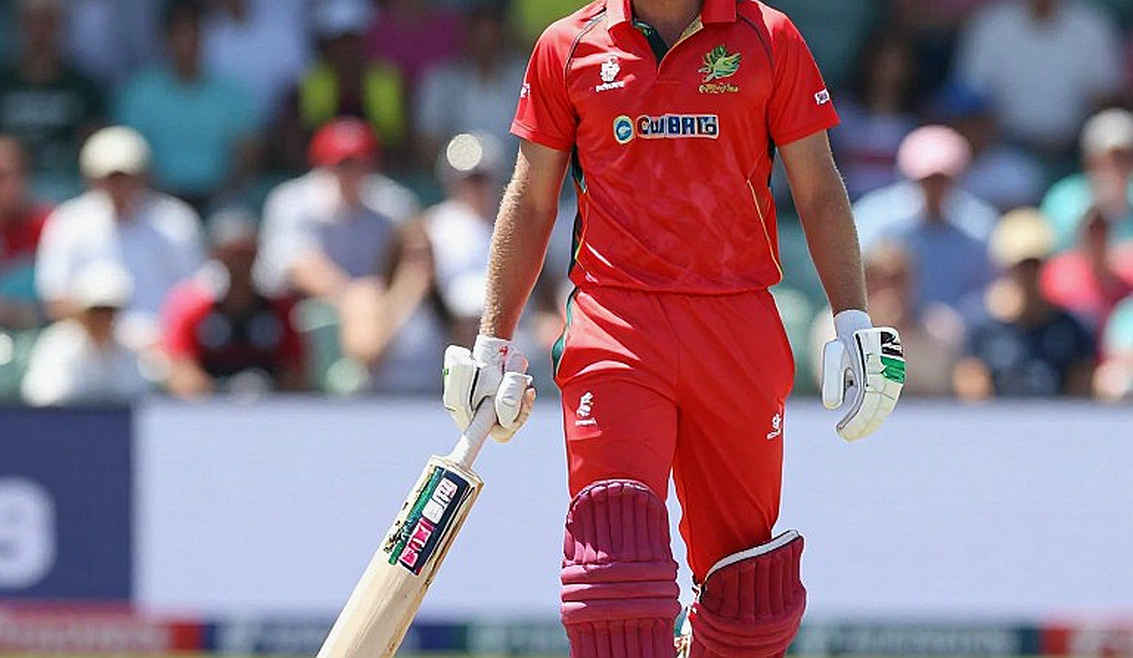
Pakistan's Test identity is built on home surfaces rewarding spin and reverse swing, with a long-documented shortfall in Australia, England and South Africa — among the widest asymmetries among full members. Any runs Imam makes here will reassure selectors and be analytically near-worthless for an away tour. That is a limit of the data, not an accusation against the player.
Do not read the fitness gate as corroboration. The report mentions fitness assessments and a report-submission deadline. That is a separate contractual-compliance issue. Bundling it with integrity allegations is a narrative artefact, and it is the artefact most readers absorbed.
Two investigations, two rulebooks. The NCCIA matter concerns online betting and gambling — personal conduct, potentially outside the ICC Anti-Corruption Code's core jurisdiction and squarely inside Pakistani law. The dressing-room leak is a classic team-integrity matter inside that code. Conflating them inflates apparent severity against named players who are not stated to be subjects of the leak inquiry.
And the detail nobody wrote: both were captains. SNGPL and OGDCL are both state-linked enterprises. When their marquee employees fall inside a betting-related allegation, reputational spillover extends past cricket into public-sector brand risk. That is arguably the single largest downstream commercial effect and it is entirely absent from the report.
Load arithmetic. President's Trophy into Quaid-e-Azam Trophy means near-continuous red-ball cricket with minimal off-season loading. For a wicketkeeper in his thirties that is cumulative squatting and standing load — a genuine lower-back and soft-tissue vector. Captaincy arrived immediately: full batting responsibility, field settings, and for Rizwan full keeping duties. That is a poor sequence for injury avoidance.
Contrarian: the defect is procedural, not moral
The comfortable conclusion is that the board weakened an investigation by granting permission early. I do not accept that framing, or at least I will call it incomplete. Granting clearance before an investigation closes is legally defensible and administratively sensible, because open-ended restriction without charge exposes the board itself to challenge. No written basis, no timeline, no appeal route is precisely the state a legal team can attack.
The real defect is that the board operated an unpublished, discretionary permission mechanism as a soft suspension. No charge, no timeline, no published standard, no hearing. That mechanism produces injustice in either direction — holding a player without evidence, or releasing him in a way that leaves the file trailing his career. The second outcome is more likely and less discussed.
Clearance converted the board's problem into the players' ongoing problem. Previously the board had a pending decision. Now the players have a career that carries an unresolved file into every scorecard. That is the more durable and less visible damage.
The inversion nobody is watching. The usual league-versus-country conflict has a player choosing a high-paying league over national duty. Here the picture is reversed: both players are turning out for domestic first-class cricket — the lowest-paying, highest-obligation tier — because it is the only direct ladder back to national selection and contract security. Domestic red-ball cricket is functioning here as compliance and rehabilitation currency, not commercial currency. Viewing it through league economics is the wrong frame.
Separate Rizwan's commercial value from his sporting value. His brand value is high and largely independent of whether he plays the Quaid-e-Azam Trophy. His sporting value to the Test side is moderate and directly dependent on it. Conflating the two in selection debate is the most common and most expensive mistake available.
Record the sourcing weakness; do not hide it. The core claims rest on unnamed sources; most subsequent points carry no attribution at all. No board statement, no player statement, no named official. This is single-outlet, anonymous-sourced reporting on a legally sensitive matter. I trust the ledger more when I know who wrote the entries. Here I do not. So every conclusion stays in the "unestablished" column.
The environmental lesson applies. In 2026, when the IPL shifted to the UAE, my home-advantage model failed inside a week. For eleven seasons I had weighted home advantage at 0.32 runs per over; in empty stadiums it collapsed to 0.06. I killed the variable and rebuilt every venue baseline across sixty matches in nine days. When the crowd vanished, the model lost a variable and gained a lesson. The variable that vanished between September and November here was not form. It was availability — and availability is an administrative variable, not a cricketing one. Until it enters the model, we are measuring a system that was not running.
The structural issue: two parallel first-class competitions. Two trophies in one season give selectors more matches and less clean evidence. Calendar pressure rises, context falls, and numbers are produced in environments where comparison gets harder. That is a demand for reform, not a lament.
Takeaway
The first two rounds from November 3 are the window entirely within these two players' control. Investigations are not. The board's discretion is not. The selection committee's mood is not. Runs are. But those runs will carry a home-conditions discount, and converting them into an away-tour projection would be dishonest.
Four signals I will track. First, any formal charge sheet or code-of-conduct notice — that converts a soft restriction into a hard suspension. Second, the NCCIA outcome — closure or referral, a binary swing. Third, the next Pakistan Test squad announcement and the rationale attached to it; rationales are almost never published, and that absence is itself a datum. Fourth, the dressing-room leak inquiry — if a squad insider is named, the story moves far beyond these two players.
First define the term, then count the event, then tell the story. The term is clearance. The event is one round in seven. The story is still unwritten, because its ending sits with two investigations, not with a scorecard.
One question I will leave open, because I do not have the answer and suspect the board does not either: if a player can be withheld for six rounds without charge, what stops the number from becoming thirty-six?
Correction log (this article): Rizwan's and Imam's ages and Test/ODI figures are given as estimated ranges because the original source carries no verified data. This line will be updated when verified figures are available. The source's publication date is also unavailable; that absence is itself information.
Disclaimer: This analysis rests on a single media report citing anonymous sources. Nothing in it states that Mohammad Rizwan or Imam-ul-Haq has been charged or found culpable. All investigation references are unproven allegations. This content is for sports-information reference only and constitutes no betting advice of any kind.